‘Marvel’s Man in Japan’ Now Chronicles Catholic Martyrs
Gene Pelc discusses St. John Paul II, Spider-Man and why he wrote a new book on the Japanese martyrs.
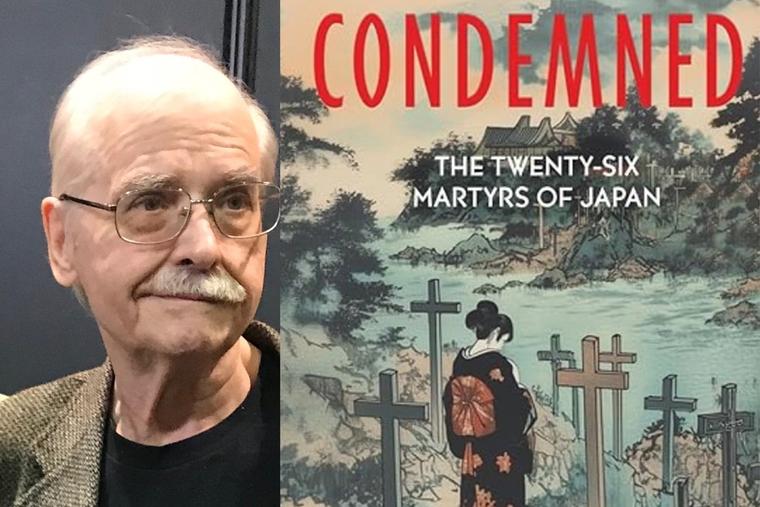
Gene Pelc first arrived on Japanese shores as a kind of missionary … but initially, the superhuman figure he promoted was Spider-Man, not Christ.
A New Yorker by birth, a young Pelc — now 81 — was sent to Japan nearly 50 years ago by the legendary Marvel Comics publisher Stan Lee and tasked with adapting Marvel’s Spider-Man comics and television shows to suit a Japanese audience. At the time, American comics had made little impact in Japan, despite Japan’s thriving manga and anime culture.
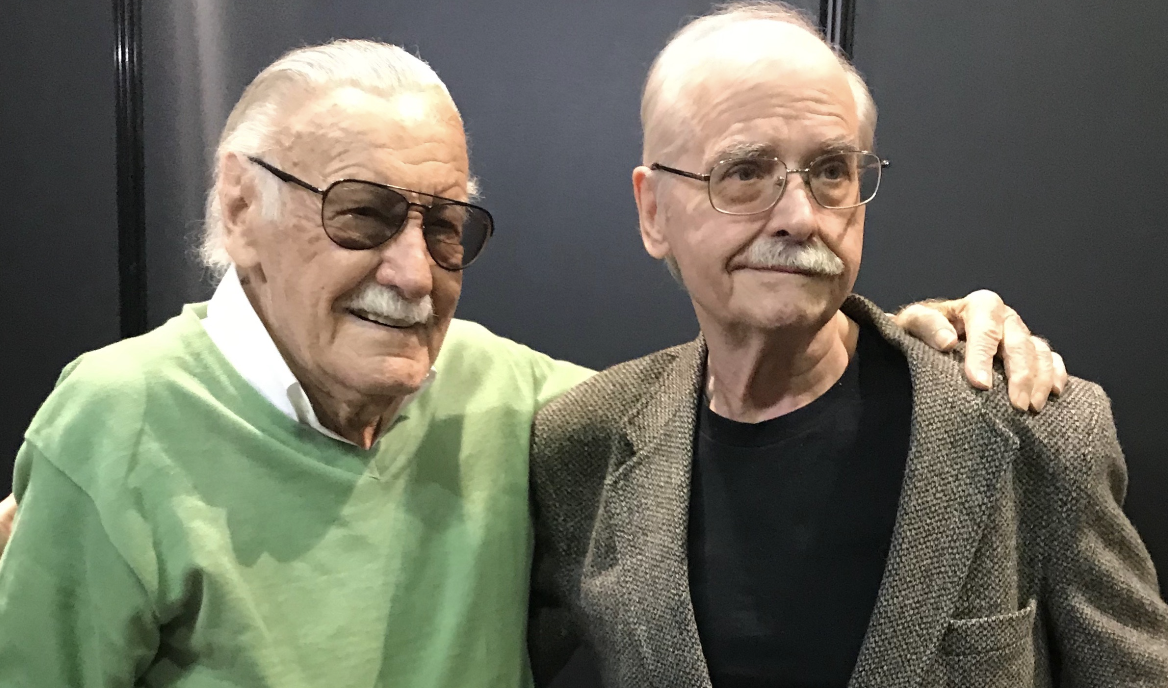
By almost any measure, Pelc succeeded in his goal, helping to create a Japanese version of Spider-Man that became a national sensation. It still enjoys a cult following today.
While laboring for Marvel in largely irreligious Japan, Pelc sought out a Catholic community, attending Mass regularly at the Franciscan Chapel Center in Tokyo. A Franciscan priest at the center, recognizing Pelc’s creativity, inspired Pelc to marry his Catholic faith with his love of comics by suggesting he create a religious-themed comic book.
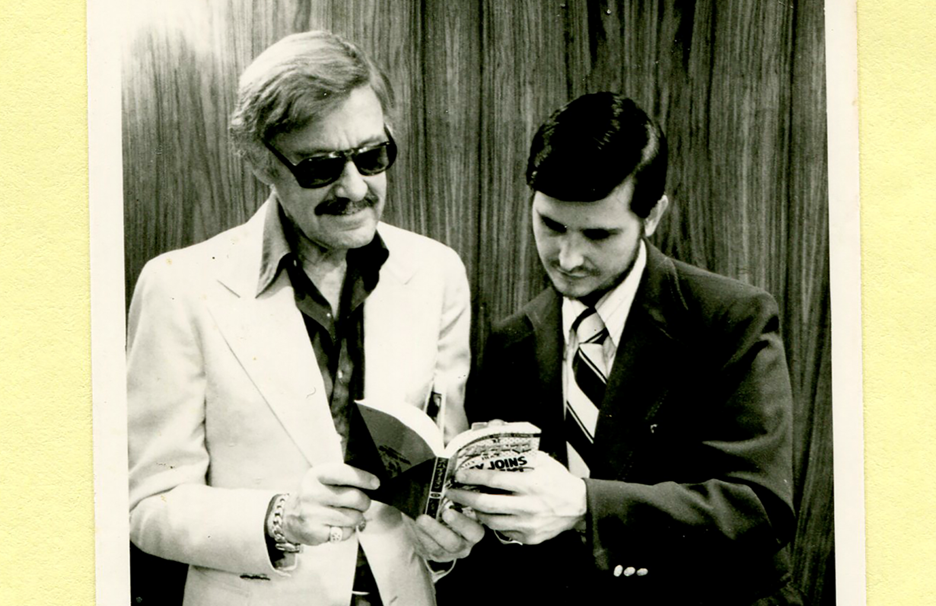
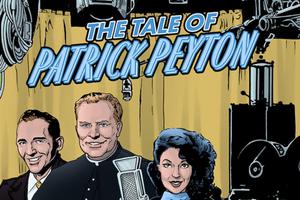
Pelc was able to convince Lee to greenlight several religious-themed comic books for Marvel featuring Catholic saints, beginning in 1980 with Francis: Brother of the Universe. Pelc also helped to create a popular comic book about the life of St. John Paul II.
Now, decades later, Pelc has turned to a different kind of project.
Condemned: The Twenty-Six Martyrs of Japan is Pelc’s new self-published historical novel, telling in dramatic fashion the story of the first major execution of Christians in Japan, which took place in 1597.
The Church in Japan had grown rapidly after the arrival of St. Francis Xavier in 1549, but a series of brutal persecutions — beginning in earnest with the 26 martyrs — drove the Christian community underground for two and a half centuries.
The 26 Martyrs of Japan, also referred to as St. Paul Miki and Companions, are celebrated in the worldwide Catholic Church on Feb. 6 and stand as an enduring symbol of the resilience of Japan’s Christians in the face of almost unimaginably cruel persecutions.
Under the orders of a samurai ruler, the group of native Japanese Catholics and foreign missionaries — which included several children — were death-marched hundreds of miles and then crucified on a hill in Nagasaki. Not one of them renounced their faith.
“It’s a very complex story. That’s one of the reasons I’ve written this book, because so few people, especially in America and the West, know of this story,” Pelc told the Register.
“The martyrs themselves are amazing people, who were willing to give their life for what they believed in. Their faith was so strong that they could smile and sing while giving up their life for God and for Jesus. That story, in itself, is a story that I think should touch anybody."
Man in Japan
The son of Polish immigrants, Pelc grew up Catholic and attended Fordham University, a Jesuit Catholic college in New York City. While at university, Pelc met and fell in love with his wife and, by extension, her native Japan. Drawn to her homeland, he observed during his visits the Japanese passion for comics and animation.
Marvel, meanwhile, wanted to break into the Japanese market with Spider-Man. Pelc volunteered to lead the effort, and Lee agreed.
While building Spider-Man’s presence in Japan, Pelc became involved with the Franciscan Chapel Center, which had been founded in 1967 as a mission for Tokyo’s English-speaking Catholics.
One day, a Franciscan priest and pastor of the parish — now deceased — named Father Campion Lally approached Pelc with an intriguing proposal: Marvel should produce a comic book about St. Francis, to commemorate the 800th anniversary of the saint’s birth.
Pelc pitched the unusual idea to Lee. Despite not being a religious person himself — at least not openly — Lee loved the idea and approved it almost immediately, though other Marvel executives were initially skeptical. But with the help of Franciscan priest and comic-book enthusiast Father Roy Gasnick and writer Mary Jo Duffy, Francis: Brother of the Universe was released in 1980, proving to be a critical and commercial success.
Building on this unexpected triumph, Pelc, being Catholic and Polish, was captivated by the global popularity of Pope John Paul II. Spurred by the saintly Pontiff’s planned visit to Japan in February 1981, Pelc initiated a comic about the Pope’s life story, consulting with Father Mieczyslaw Malinski, a close friend of the Holy Father.
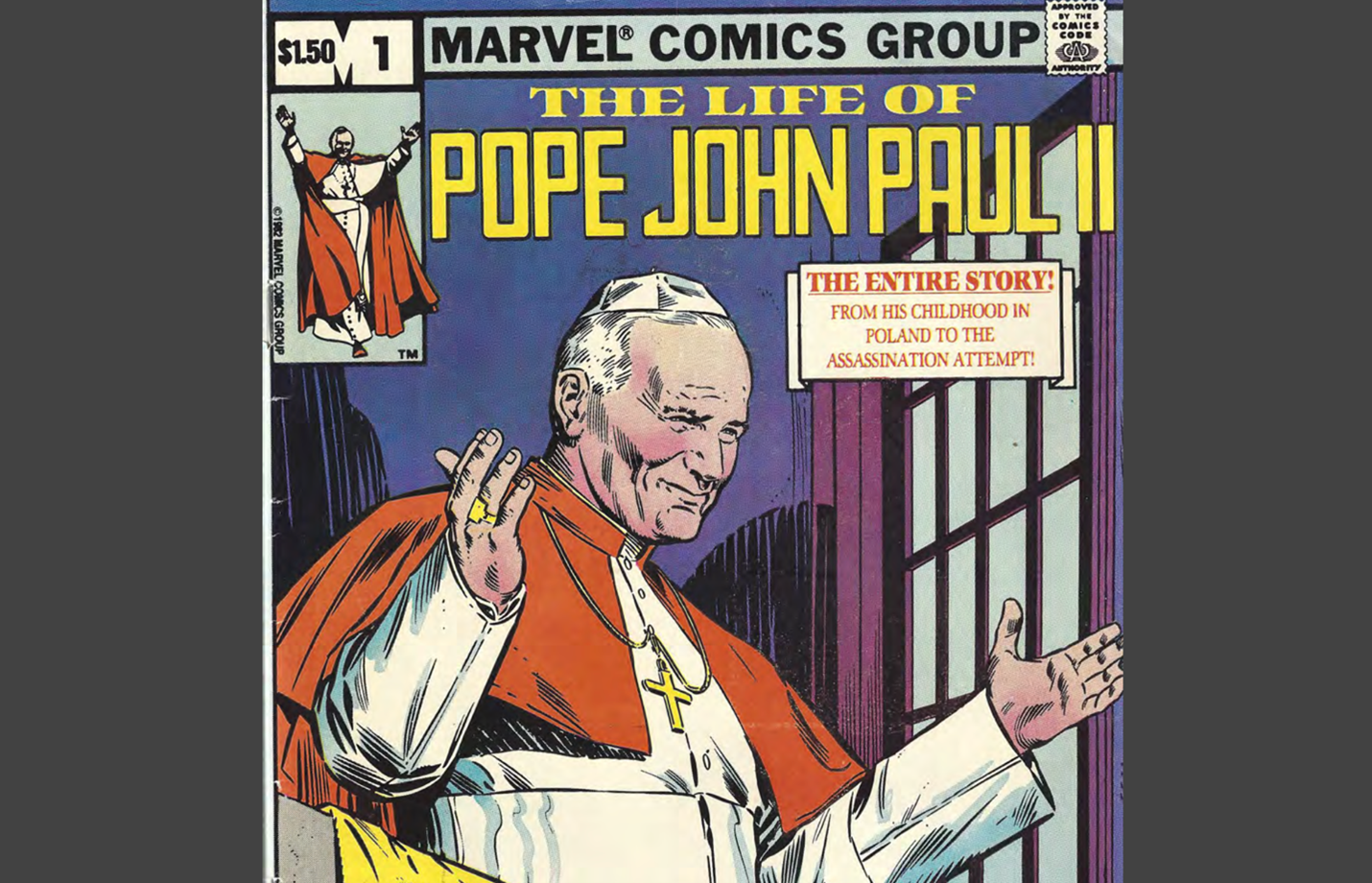
The project encountered significant hurdles, including the assassination attempt on St. John Paul II in May 1981, which the team incorporated into the comic’s narrative. To date, an estimated 1 million copies of The Life of Pope John Paul II comic have been distributed worldwide.
Getting to Know the Martyrs
Despite his professional success, Pelc remained puzzled by Japan’s religious landscape. Unlike in nearby countries such as the Philippines or South Korea, Christianity never gained a strong foothold in Japan — at least not in the modern era.
“When I came to Japan, one of the things I noticed was how few Christians and Catholics there were in Japan. ... That interested me. Why? Why is this happening?” Pelc said.
According to the CIA World Factbook’s 2021 estimate, Japan remains only about 1.1% Christian, with Shinto and Buddhism the dominant religious professions at about 48% each, though in reality many Japanese people do not practice religion at all.
His research led him back to Japan’s “Christian century,” beginning with the arrival of St. Francis Xavier in 1549.
Within decades, Catholic missionaries had baptized hundreds of thousands of Japanese. But by 1587, Toyotomi Hideyoshi, the country’s ruling samurai leader, had banned Christianity. The martyrdom of the 26 Christians in Nagasaki marked the start of two and a half centuries of underground Christianity, as Japan shut itself off from Western influence and violently suppressed the faith.
St. John Paul II, during his 1981 visit to Nagasaki, described Japan’s martyrs as “a glorious multitude, like that of the Christians of the first centuries.” Pelc was moved by that legacy and began researching the martyrs’ story, a process he pursued intermittently for nearly 50 years.
Throughout the process of writing his book, Pelc was helped by resources from Sophia University, Tokyo’s Jesuit university, as well as the insights of the priests at the Franciscan Chapel Center. His dedication to unraveling the story of the martyrs led him to Nagasaki, where he visited museums and spoke with local priests to piece together a narrative.
All the while, Pelc connected with the descriptions of the martyrs’ suffering on a personal level. Though never tortured or injured specifically for his faith, Pelc has endured his fair share of physical pain: most notably a serious car accident as a young man that left him with many broken bones, as well as an injurious run-in with a falling piano.
“I’ve had to put up a lot of pain and things like that in my life. Reading the story of these people — the missionaries’ faith, their belief in God … that influenced me to put my own problems in perspective,” he explained.
Who Were the Japanese Martyrs?
While Pelc endeavors to keep the martyrs’ story alive through fiction, Jesuit Father Renzo de Luca ensures the martyrs’ legacy is preserved in Nagasaki itself.
Father de Luca, director of the Twenty-Six Martyrs Museum in Nagasaki, has spent nearly three decades preserving and sharing the story of Japan’s persecuted Christians. An Argentinian missionary who first arrived in Japan in 1985, Father de Luca was encouraged by his spiritual director — Father Jorge Bergoglio, the future Pope Francis — to volunteer to go.
Father de Luca admitted he knew little about Japan’s Christian past before entering the Jesuits, but once he immersed himself in Nagasaki’s history, he discovered the remarkable endurance of faith amid centuries of persecution.
In the decades after St. Francis Xavier brought the Gospel to Japanese shores for the first time, missionaries from the Franciscan, Dominican and Augustinian orders came to Japan. Within two generations of Xavier’s arrival, official statistics counted some 650,000 Christians.
But it was not to last. Hideyoshi banned Christianity, which led to numerous other mass martyrdoms, including the infamous Great Martyrdom of 50 people at Edo in 1623, the 400th anniversary of which the Church in Japan commemorated two years ago.
Despite the brutality, a small community of “hidden Christians” — “kakure kirishitan” in Japanese — were able to secretly cling to their faith until French missionaries returned in the 1860s and the country’s rulers once again allowed Christians to worship freely.
“The more you research, the more you realize how many people have died, how much they worked for the mission, how concerned they were for the Japanese people,” Father de Luca reflected.
Today, nearly all of Japan’s 350 saints and blesseds are martyrs, and Catholic feast days celebrated throughout the country often center on their sacrifice.
The endurance of the hidden Christians still astonishes Father de Luca, who welcomes numerous Catholic pilgrims as well as scores of Japanese students to the museum every year.
“It’s an amazing story that they managed to keep their faith, their traditions, all that. That shows how deeply the Christian faith entered into Japan,” he said.
Pelc, who founded a merchandising company for touring musical artists in Japan after leaving Marvel, has long since stepped away from comics professionally. But he still muses about comic-book ideas.
“Very few people seem to know a lot about Pope Leo’s early life,” he laughed. “Why not do a comic about him?”