Testaments to Faith
As the Church prepares to mark the 400th anniversary of the death of Father Matteo Ricci, the Register visits Beijing’s South Cathedral, built on the home of the Jesuit missionary.
There are a lot of things to see in Beijing, but what fascinated me the most was how the Catholic Church was treated here, behind the tattered remains of the Bamboo Curtain.
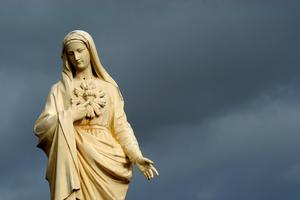
South Cathedral (Nan Tang), also known as the Cathedral of the Immaculate Conception, was built near the home of Father Matteo Ricci, the Italian Jesuit missionary (1552–1610).
Beijing has two “cathedrals.” The Jesuits who established this and the “North Cathedral” saw one as a basilica but used the same word to describe them both for cultural reasons. Only the southern church is the actual cathedral, seat of the bishop.
In Chinese culture, the south is considered the most important cardinal direction. Thus, anything associated with it is afforded great honor and respect.The universal Church is getting ready to mark the 400th anniversary of Father Ricci’s death in 2010.
Pope Benedict XVI wrote recently to the bishop of Macerata, Italy, the missionary’s birthplace, noting that the Jesuit was “gifted with profound faith and extraordinary cultural and academic genius.”
He “dedicated long years of his life to weaving a profound dialogue between West and East, at the same time working incisively to root the Gospel in the culture of the great people of China,” the Pope wrote. “Even today, his example remains as a model of fruitful encounter between European and Chinese civilization.”
The cathedral is also not far from Tiananmen Square, where June 4 marked the 20th anniversary of the conflict between protesting students calling for democratic reform and government forces. Estimates of the number of civilians killed by the army range from the official government report of several hundred to other reports claiming 3,000.
Long History
Catholicism has existed in China since the Tang Dynasty (eighth century). The first Christian missionaries to China called the faith “bright teaching.” Catholics will frequently use the term “universal teaching,” which is appropriate, considering the original meaning of the word “catholic.”
In 1294, John of Montecorvino, an Italian Franciscan, arrived in Beijing. He built two churches, one facing the imperial palace, and by the year 1300, had converted 30,000 souls.
The Catholic Church estimates that 8 million people belong to the illegal, underground and persecuted Church still loyal to Rome, while an additional 5 million belong to the Chinese Catholic Patriotic Association.
Father Ricci and his fellow Jesuits believed that by impressing their Mongol and Chinese hosts with Christian technical and academic skills they could put themselves in the best possible situation to evangelize.
Soon, Jesuit priests and brothers were given government posts as musicians, artists, linguists/interpreters, cartographers, instrument makers, engineers, astronomers, mathematicians and clockmakers.
They also believed that the best way to evangelize the Chinese was by using Confucian precepts and vocabulary and by striving to fit into Chinese society, even going so far as to dress in the robes of a Confucian scholar and making attempts to reconcile Christianity with the classic Confucian texts.
Father Ricci never described the Catholic faith as “foreign.” Instead, he always insisted that the Chinese had always believed in God and that Christianity is simply the most perfect manifestation of their faith.
Beacon to All
Located in an area of Beijing overcrowded with gray, squat dilapidated buildings and gray, nondescript, towering apartment buildings, South Cathedral is a beacon to all. Construction began in 1703 and lasted two years. The cathedral has withstood four devastating attacks in the intervening centuries.
From the outside, the cathedral looks like it was transported directly from Europe. The interior, however, is a striking mélange of European and Chinese artistic and architectural elements. The round white marble columns scattered throughout the apse are fused with traditional Chinese red square columns. The fused effect is stunning, creating round columns with jutting red corners. The overall effect is both warm and inviting. It also serves as a symbol of the merger of Christian beliefs into Chinese culture.
The church’s murals have a decidedly Chinese cast to them. St. Faustina’s iconic Divine Mercy painting hangs proudly alongside several Chinese hanji scrolls. The color red is a symbol of joy and prosperity in Chinese culture, so a great deal of the interior is decorated in this color.
I stayed in my pew until after the congregation had left. As I was ready to leave the church, a member of the parish approached me tentatively and politely. He had a broad smile that threatened to swallow his entire face. Christ’s light truly shone from it.
I asked as gently as I could if the church was of the “patriotic variety” or loyal to Rome. His countenance wavered only for a second as he casually looked around him.
“The church is under the administration of the Patriotic Organization,” he admitted in passable English, “but I am not, nor are the people who worship here.”
I unconsciously placed my hand into his, not necessarily to congratulate him, but to receive his blessing. Despite the persecution and the threat of death and imprisonment, this man was keeping the true Church alive in his heart.
He showed me around, specifically pointing out the tombstones and statues shattered by out-of-control students during the Cultural Revolution. The pieces lay where they fell as a reminder. Bullet holes riddled the church’s facade. And despite it all, the church remained, and, more importantly, the Church remained. The only intact statue was that of Matteo Ricci.
When I took my leave, we bowed to each other — his obeisance out of politeness and mine out of the deepest respect for his sacrifice and faith.
Angelo Stagnaro
writes from New York.
- Keywords:
- June 7-13, 2009