U.S. Notes & Quotes
Scandal Seen as an Opportunity to Reject Immorality
On September 12, Scripps Howard focused on the comments of a bishop and a layman, both of whom urged Americans to take the opportunity to refresh their moral standards.
Bishop James McHugh, of Camden, N.J., wrote in an article for his diocesan newspaper, “My purpose is not to judge the president, much less punish him. My deeper and more fearsome concern is the prevailing public reaction and what that says of the moral fiber of the country,” the bishop said.
He said behavior like the President's “is never private. It always has social implications. That is why all societies try to control it by laws, customs, social restrictions,” he said. “His dilemma should be a lesson to the nation that our national mores and attitudes need refashioning.”
Catholic laymen William Bennett's new book The Death of Outrage also mourns what he fears is the deadening of the public's moral conscience. Things have gotten so bad, he said in the report, that the public airing of the President's conduct, unfortunate in itself, may be necessary to force the public to confront — and reject — the present state of American morality.
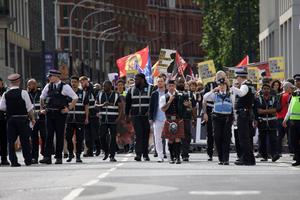
Picketers Must Not Disturb Mass, Says Cardinal O'Connor
According to the report, the cardinal decried the picketers' timing during his 10:15 sermon.
Calling himself the son of a union man whose archdiocese has negotiated with unions in good faith, he said. “I will defend the right to collective bargaining in good faith until the day I die … I hope that nothing forces me to revise my personal position of a lifetime, but as sacred as is the right to collective bargaining, some things are even more sacred … the holy sacrifice of the Mass, to me of inestimable holiness … [is] in no way to be politicized …”
Furthermore, the cardinal “hinted that the protest, which violates a contract provision prohibiting certain unions from demonstrating outside the cathedral during the 15 minutes before and after Mass, could be met with serious consequences,” added the Post.
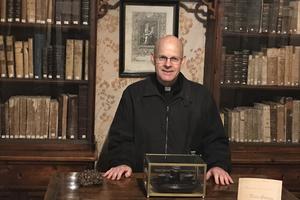
Priests Suffer from False Accusations, Says Bishop
The article showcased the bishop's comfortable and convincing style of explaining the Church's teaching on issues such as celibacy, the all-male priest-hood, assisted suicide, and abortion.
But he also spoke of the pain of both true — and false — accusations of pedophilia.
His interviewer asked, “Have you as an administrator ever done anything that just doesn't sit well with you deep down?” He answered by saying he once had to confront a priest who had been accused of an incident from 20 years before that the priest denied. The Bishop put him through the painful and difficult psychological assessment required by the Archdiocese. The tests found that guilt was unlikely, and the accuser then admitted his charge was false.
Bishop McGrath says he told the priest, “You're totally exonerated. It's fine. It's over and done.” But, after the ordeal of the charge and the test, “It was like putting Humpty Dumpty back together; you can never do it. I had stolen a part of that person's soul that I will never be able to put back.… I had put him through hell. And his accuser could be so flippant about it .…
“I've always regretted that because I realized a part of that man died that day. This is a man who dedicated all his life to doing good things for people. And then to be accused of something like that and it not be true — it devastated him. And he still does good things. But I know there is a part of him that just doesn't revive.
“So you can do an awful lot of damage to another human being, damage that you can never take back. On the other hand, I act because I must make sure that people are safe … When somebody brings in an accusation to me, I must respond to that … I don't want anybody endangered.”
- Keywords:
- September 27-October 3, 1998