Preferential Option for the Fit
Readers of the Daily Blog can be forgiven for concluding erroneously that its only contributors are Register Executive Editor Tom Hoopes and myself.
But nothing could be further from the truth, even if ours are the only two bylines that appear here regularly.
Many of the items we feature aren’t spotted by us but rather by the sharp eyes of the other members of the Register’s stellar editorial team — Publisher & Editor in Chief Father Owen Kearns, LC, Editorial Assistant Robyn Lee, Senior Editor David Pearson, News Editor John Burger, Associate Editor Tom Wehner, Copy Editor Amy Smith and last but most definitely not least, Senior Writer Tim Drake.
Such as this thought-provoking commentary Dave Pearson e-mailed my way last month that I was forced to set aside due to the pressing flood of election-related blogging.
It’s about what its author, Peter Augustine Lawler, characterizes as “the preferential option for the young”: The obsession with youthful vitality, material productivity and individualism that characterizes today’s post-industrial era.
“These are the best times ever to be young, smart, pretty, and industrious,” opines Lawler, author of Homeless and at Home in America: Evidence for the Dignity of the Human Soul in Our Time and Place and a member of the President’s Council on Bioethics. “But the pressure is on like never before to be young, smart, pretty, and industrious. (Not that times were ever that good for the stupid, ugly, and lazy.)”
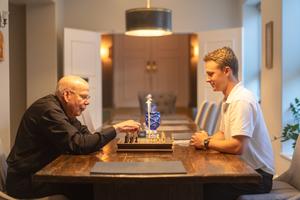
The historical irony that lies at the core of Lawler’s discussion is the fact that even as society becomes a place where both attitudes and technology favor the young and fit, more and more of its members are becoming old and unproductive.
And since individualism is so prized today, those older and more decrepit have considerably less of a universally recognized moral claim to the support of their juniors. And since today’s individualistic elders were far less inclined than their forefathers to form families, they are also correspondingly less likely to have children of their own who are willing to make sacrifices on behalf of their aging parents.
Says Lawler, “It’s very good news that people are living longer. There seems to be a new birth of freedom in the growing period between parenting and productivity and debility and death. That freedom, for prosperous Americans, seems to be for whatever purpose the free individual chooses.
“But, from another view, the individual is productive for a small part of his life, and a dependent for longer (as a child and as an old person) part. If freedom and dignity are intertwined with productivity, then it may not be so great after all to live a very long time. Will the shrinking number of productive young people be willing or even able to support the increasing number of the unproductive old? The old, maybe more than ever, seem to be little more than a burden on the young.”
Lawler does not paint a cheerful picture of the consequences of these trends.
“One downside of thinking of oneself as a self-sufficient individual is too much of one’s life really kicks in when you get old and frail,” he warns. “The fast growing demographic category is men over 65 without children or spouse. And even having a kid or two might not help you much in our mobile and increasingly duty-fee society. A piece of good news is that we’re persistently pushing heart disease and cancer back. The corresponding piece of bad news is that more and more seem destined to die of Alzheimer’s. (Imagine what Alzheimer’s must be like for someone who has no one to rely upon who loved them prior to their getting the disease.)”
Predicts Lawler: “We’re going to have more and more old and frail, debilitating and slowly dying wards of the state, so to speak. And the care they’re going to get, because they’re really on their own, isn’t likely to be good. The truth is we have no idea how we’re going to afford it.”
— Tom McFeely