Blessed John Henry Newman Explains Faith Doubts and Difficulties
Working with high-school students means, very often, in the confessional, I’ll hear, “I’ve had doubts about my faith.” It’s a good opportunity to clarify the difference between a “doubt” and a “difficulty.”
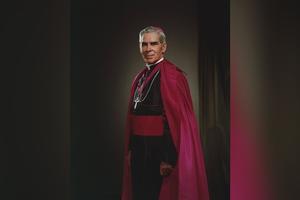
Blessed John Henry Newman wrote, “Ten thousand difficulties do not make one doubt.” I try to reassure the person who’s worried about doubts by explaining that difficulties in religion are part of taking the faith seriously.
In fact, I am more worried by those who have no difficulties than those who do, for I worry that those who have no difficulties have not yet really begun to think things through.
However, as John Henry Newman observed, a difficulty is not a doubt. The person with a difficulty says, “How can that be so?” whereas a person who doubts says, “That can’t be so!”
The first statement expresses difficulty, but willingness to believe. The second statement expresses cynicism and unwillingness to submit to the Church’s teachings. The person with difficulties says, “I believe, Lord; help my unbelief!” The person with doubts says, “I don’t believe Lord, and don’t bother to help my unbelief!”
A difficulty arises when we confront some teaching of the Church — either a moral precept or a doctrine — and honestly find it hard to accept. In his Parochial and Plain Sermons, Newman wrote, “The use of doubts and difficulties is obvious ... our faith is assailed by various doubts and difficulties in order to prove its sincerity.”
We experience trials in the faith for three reasons: to strengthen us, to clarify our beliefs, and to help us proclaim the Gospel.
So, doubt is out, but difficulties are in. The person with difficulties may be struggling, but he is struggling to understand more fully and completely.
This is the first reason for a difficulty: It strengthens our faith. Just as an athlete or musician trains and practices and sweats to attain the goal, so the believer (if his faith is to be worthwhile) must face difficulties and overcome.
Just as the athlete or musician is strengthened by the experience of perfecting his skill, so when we work through our difficulties, we emerge purer and stronger in our faith.
The second reason for difficulties is so that our faith might be clarified. How can you expect to get the right answers unless you ask the right questions?
It’s the same in our faith. We come to understand more by facing the difficulties and asking the right questions. Whether we are struggling with a matter of Catholic doctrine or some aspect of Catholic moral teaching, it is by enquiring with an open heart and alert mind that we come to a fuller and deeper understanding of our faith.
Most often, the difficulty was caused by some misunderstanding, and by asking questions, we come to understand more fully.
The third reason for difficulties is to help us proclaim the Gospel with compassion and insight. Each of the baptized are called to help share the Good News, but if none of them had difficulties, how would they understand and sympathize with all those who need to hear the truth but face great difficulties in belief?
By going through the difficulties, we understand what others face, and by finding the answers, we are prepared to share them with others.
Finally, it is so difficult to believe because it is so difficult to obey. Later on in the same sermon, Cardinal Newman writes, “To those who are perplexed in any way, for those who seek the light but cannot find it, one precept must be given — obey. It is obedience which brings a man into the right path. It is obedience which keeps him there and strengthens him in it.”
Obedience seems a scandal in a world of individualism and self-judgment, but the call to obedience is what makes the Catholic faith a “sign of contradiction.” “What! Shall I obey?!” modern man cries.
The reply is a hearty, “Yes — for it is in obedience that your faith will live and your difficulties will be resolved; but it is in your disobedience that your difficulties will turn into the doubts which will eventually destroy your faith.”
This does not mean that the Church calls us to mindless obedience. That is the way of the coward and sluggard.
Instead, we are called to obey with our hearts on fire and our minds alert. If we would find, we must seek, and if we wish the door to be opened to us, we must knock.
Father Dwight Longenecker is a parish priest at Our Lady of the Rosary and chaplain to St. Joseph’s Catholic School in Greenville, South Carolina.
He is online at
DwightLongenecker.com.
- Keywords:
- September 25-October 8, 2011