Print Article | Email Article | Write To Us

Daily News

How the New Missal Is Already Fostering a Deeper Understanding of the Mass (1540)

Cardinal Donald Wuerl, author Edward Sri and musician Matt Maher discuss the opportunity of the new translation.
12/07/2011 Comments (13)
Archdiocese of Washington Facebook

– Archdiocese of Washington Facebook

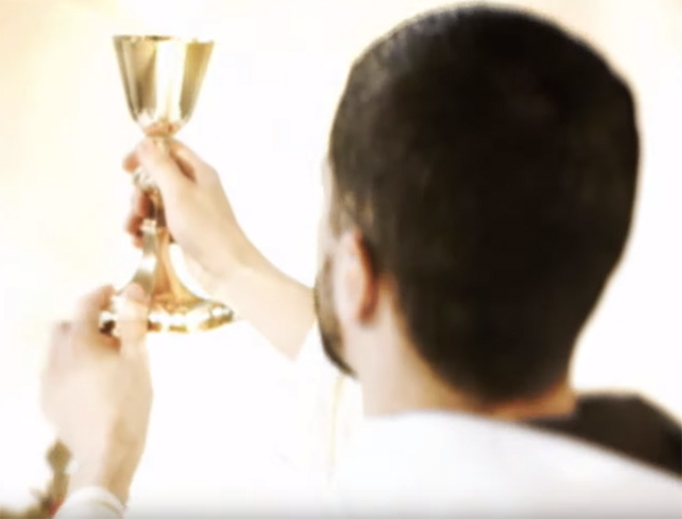
A panel of liturgical experts recently noted that the early weeks of using the new English translation of the Roman Missal should be an occasion for Catholics to grow deeper in their understanding of the Mass.

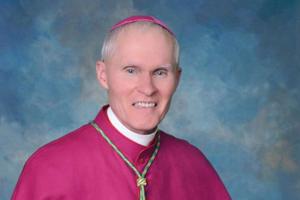
Cardinal Donald Wuerl of Washington said that the new translation provides a “great opportunity” for those who are familiar with the old responses to gain a “deeper grasp of their faith.”

The cardinal participated in a Dec. 6 phone conference to discuss the impact of the new translation, which went into effect in the English-speaking world on Nov. 27, the First Sunday of Advent.

“It helps to step back” and reflect on the Mass from time to time, said Cardinal Wuerl.

He explained that in celebrating Mass he has experienced a deep spiritual engagement with the text, as he has become more aware of the meaning of each word he says.

Edward Sri, author of A Biblical Walk Through the Mass, said that after hearing about the changes Catholics are now beginning to “experience” the new translation for the first time.

Sri, who serves as provost at the Augustine Institute in Denver, said that the time of transition presents a “wonderful opportunity” to answer people’s questions, “not just about the new translation, but about the Mass as a whole.”

By continuing to preach about the Mass and the “profound significance” of the changes, priests and deacons can provide a “great doorway” for people to enter more deeply into the liturgy, he said.

Father Dan Barron, OMV, editor of Magnifikid!, the weekly children’s worship aid published by Magnificat, emphasized the importance of personal witness in reaching out to share the faith with others.

A priest for 15 years, Father Barron said that he has personally experienced an increased awareness of the mysteries of the Mass and finds himself “more drawn into prayer and contemplation in the midst of the liturgy than ever before.”

Grammy-nominated Catholic musician Matt Maher commented on the continued role of music in the liturgy, saying that music is a humble tool that serves to aid active participation in the Mass.

He noted that this participation requires that people not only sing and respond when appropriate, but also enter fully into moments of silence within the Mass.

Maher added that Catholics should not expect a perfect adjustment after two weeks, but patiently realize that “these things take time.”

He said that he is especially excited for future generations who will grow up seeing the treasures of the Mass “unlocked” by the new translation.

 

Filed under cardinal wuerl, edward sri, liturgy, mass, matt maher, music, new translation

Comments

Post a Comment

How wonderful!  Praise God for this beautiful translation.  He continues to lead His Church in Truth.

The Cardinal may be winning points with the Vatican by continuing to put their spin on the new missal but he isn’t folling anybody!

As a catechist and as the owner of the catechism company CatechismClass.com, I have heard for over a year how a new translation would be regressive and force “complicated theological words” on the Faithful who would be helpless, confused, and who ultimately lose interest in Mass attendance altogether.  But, what has happened is that the Faithful want to know why our Lord Jesus Christ is consubstantial with the Father and what it means to be of “one substance.”  The Faithful want the pure, unadulterated Catholic Faith.  They want the same Faith that was taught for over 2,000 to the poor and illiterate, who despite their situation, all came to an understanding of the Faith even with the Mass said in Latin and with “complicated theological words.”  This is a time for us to reflect on the ability and desire of the Faithful to learn what the Church has always taught, using the words it has used for centuries.

Amen to Matthew’s comments.  The eucharistic prayers are now much more beautiful and prayerful. And those of us ‘ordinary’ Catholics in the pews are very capable of learning and understanding new/different words.

The article would come alive with the “reality” of the matter if the term “Mass” would be replaced with—-“the Holy Sacrifice”.  It is time that the people of God realize that they go to the House of God to offer “the Holy Sacrifice”.

Anon said much more in just a few words, then what the so-called experts are trying to say with a lot of meaningless prattle. The prayers of the Priests are much better, but the few mindless words that we the money-payers have to say are sad. I didn’t realize that the Body & Blood are to heal only our soul & not our body or mind. What a sad let-down that is & of course, we know that Jesus suffered & died for all of mankind, but only a very few will accept His gift of eternal salvation. When the Bishops themselves realize just how important Mass truly is and put back the Holy back into the Holy Days of Obligation (which means to stop this nonsense about the Holy Days falling on a Sat. or Mon.; get the people back into Church on SUNDAYS as our Holy Father has mentioned more than once; restore the Altar rails; put Jesus back in the middle of the Church, which our Holy Blessed John Paul II TOLD THEM TO DO; get rid of the girl “servers”; in other words: REJOIN THE ROMAN CATHOLIC CHURCH once again as the “pope” of the American catholic church is dead (Ted Kennedy).  +JMJ+

The word chalice is not in the bible. Cup is in the bible. I don’t think Jesus said chalice in hebrew or armenia at the last supper. The new mass translation is wrong here in the consencration.

So, Gary, you claim that the Church is wrong. Were you at the last supper? Not everything is mentioned in the scriptures.  That is why we have an infallible Church to guide us.
I never expected to see a return of the spirituality misplaced by the Novus ORdo in my lifetime.  Happily, I was wrong.  I never stopped saying to myself Lord,I am not worthy that you should enter under my roof, but only say the word and my soul shall be healed. Words are indeed important
I never replaced I with we in the creed because I did not want to rely on a community with 75 percent that don’t believe in the Real Presence for my salvation.  That is the main tragedy for changing the Mass of St Pius V.

Gary - I noticed that “chalice” ought not be used too.  In fact, at a parish gathering on the new liturgy, someone asked about the meaning of the phrase, “The Most High”, in our Gloria.  The lead catechist could not answer the question.  So later, I looked up the title, and learned it is used only for God, the Father.  Jesus is the “Son of the Most High”.

I learned a saint hundreds of years after Pentecost came up with the term, “Most High Jesus Christ”, for the Gloria in the Latin Rite.  But in the Eastern Rite, that term is not used.

If they revise the liturgy words again, I hope they go back to the word “cup”, and Jesus is addressed properly, as the “Son of the Most High”.

I am a priest, and I feel the new missal suffers from several deficiencies. First, as many have already noted, the English of the new translation does not flow well. Its cadence and rhythm leave much to be desired. If I had produced English translations of Latin similar to those found in the new missal back in my seminary days, the professor would have failed me. I say this from the perspective that a translation should reflect the manner in which people actually use the language. A literal translation may be accurate and understandable, but that does make for good English. Second, and more serious in my opinion, is the lack of accessibility of the new missal. I am pastor of poor parish where most of the members are not well educated. While most have graduated from high school, they tell me that they have never encountered many of the words in the new missal. Also, I have a large percentage of native Spanish speakers in my parish. They want to start attending English Masses, and I am anxious to have them do so as well. This trend is especially true among the children of immigrants. However, as they learn English on the conversational level, they lack the vocabulary to understand the new translation. I have even heard this comment from foreign born priests working in the United States. I fear the new translation will alienate our immigrants. And immigrants represent the future of the Church in the United States. Do we really want them to perceive the English liturgy as inaccessible?

As a lector, I find the changes in our Mass are very insignificant and anti-climatic when compared to the huge build up promoted by my diocese during all of 2011.  The Bishops would have been better served by promoting greater education in the Christian/Catholic faith by each and every parish priest.  I hate to say it, but the whole build up has been much ado about form rather than real substance.

I agree with Lector.  It seems to be about the smells and the bells, for lay people, and for those in power to regain more control over what happens during the liturgy, perhaps just to be in control.  While I think they were well-intended, as there were abuses (like girls wearing short shorts on the altar, and families bringing up the gifts wearing flip-flop shoes, shorts and mini-skirts) it would have been better to have spent the diocesan teaching time and the parish teaching time with matters that will be of eternal value. 

I think of all the money spent on books, and education of lay people, and can’t help but think it’s because celibate men without real jobs haven’t a clue what it is to support a family and live within a budget. 

I wish there were continuing education for clergy of all ranks and in Scripture study and in preaching, and in average everyday life.  Now that would be helpful.  It would be more like what the apostles were like.

I was re-reading “Rotomobees” comment, and wanted to add that I agree with him, 100%.  Further, since he is a priest, his comments should hold the most weight among all our comments.  While lay people’s responses have changed only a little, the priest’s words have changed the most, and his perspective would be seen from all sides of this issue.

It’s commendable that this priest is able to put himself into the shoes of his parishioners, be they young or older, and also of foreign-born priests.

His points are well-taken and ought to be considered even at this late date, as a “review” of how the new liturgy is working for the USCCB & the Vatican, perhaps 12 months after the new liturgy has been in place.

“Rotomobees” input would have been valuable for the Vatican to have considered 15 years ago, when the process started to revise the liturgy.  He has good insight and an ability to be compassionate and practical.  So my earlier comment would not apply to him, as he’s obviously an exception among the clergy, and not the rule.

By his comments, he is interested in the spiritual life of those under his pastoral care & concerned with matters that have eternal value.  I wish he had more clout in the church.  Fr. R sounds savvy.  I’m glad I re-read what he had to say.

Post a Comment

By submitting this form, you give The National Catholic Register permission to publish this comment. Comments will be published at our discretion, and may be edited for clarity and length. For best formatting, please limit your response to one paragraph and don't hit "enter" to force line breaks.

Name:

Email:

Write your comment:

Please enter the word you see in the image below:


Notify me of follow-up comments.