How Close Were We To A Papal Resignation?
 Apparently, we were closer than commonly realized.
Recently the blogosphere and the mainstream media have been discussing John Paul II’s practice of self-mortification. Though some of the details had been known before, new life was given to the story by Msgr. Slawomir Oder’s new book on John Paul II, which revealed new information.
Oder’s book has ruffled some feathers at the Vatican, because Oder is the postulator of John Paul II’s cause for sainthood, and it is not customary for postulators to write tell-all books including the kind of behind-the-scenes information that Oder’s does. Worries include that this book may make it harder for future postulators to get witnesses to be frank if they think their comments will appear in public.
Reportedly, the chill about the book has grown so strong that Oder is no longer willing to publicly comment on his own book.
But amid the hoopla about John Paul II’s self-flagellation and questions of the prudence of the book, another very interesting subject has been neglected: Just how close were we to a papal resignation during the reign of John Paul II?
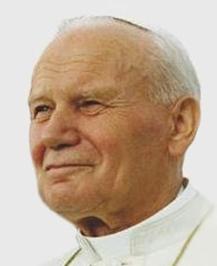
For years rumors had circulated that John Paul II would resign when he turned 75, which he did in 1995.
The logic was that bishops submit their resignations at age 75 (though they can serve longer if the pope chooses not to immediately accept their resignation). Perhaps the pope should resign at that age, too. If the burdens of pastoral office for an ordinary bishop are such that submitting a resignation at age 75 is appropriate, surely the even greater pastoral burdens of a pope would make this reasonable, too.
John Paul II apparently spent years considering this line of thought, as revealed in Msgr. Oder’s book. He also made contingency plans in case he became unable to fulfill his pastoral responsibilities. (Apparently Pius XII did the same thing, penning a letter specifying that he was to be considered as having resigned if he was kidnapped by the Nazis, as he thought he might be.)
Catholic News Service reports:
Msgr. Oder’s book also marked the publication for the first time of letters Pope John Paul prepared in 1989 and in 1994 offering the College of Cardinals his resignation in case of an incurable disease or other condition that would prevent him from fulfilling his ministry.
For years there were rumors that Pope John Paul had prepared a letter instructing cardinals to consider him resigned in case of incapacity.
But even a month before his death in April 2005, canon law experts in Rome and elsewhere were saying the problem with such a letter is that someone else would have to decide when to pull it out of the drawer and apply it.
Church law states that a pope can resign, but it stipulates that papal resignation must be “made freely and properly manifested”—conditions that would be difficult to ascertain if a pope were already incapacitated. . . .
The 1989 letter was brief and to the point; it says that in the case of an incurable illness that prevents him from “sufficiently carrying out the functions of my apostolic ministry” or because of some other serious and prolonged impediment, “I renounce my sacred and canonical office, both as bishop of Rome as well as head of the holy Catholic Church.”
In his 1994 letter the pope said he had spent years wondering whether a pope should resign at age 75, the normal retirement age for bishops. He also said that, two years earlier, when he thought he might have a malignant colon tumor, he thought God had already decided for him.
Then, he said, he decided to follow the example of Pope Paul VI who, in 1965, concluded that a pope “could not resign the apostolic mandate except in the presence of an incurable illness or an impediment that would prevent the exercise of the functions of the successor of Peter.”
“Outside of these hypotheses, I feel a serious obligation of conscience to continue to fulfill the task to which Christ the Lord has called me as long as, in the mysterious plan of his providence, he desires,” the letter said.
I must say that I think John Paul II made the right decision by not resigning at 75, for a whole host of reasons. Being elected pope is like being married to the Church. Barring truly grave problems, the union should remain. Merely turning a certain age should not mark its end.
And imagine what would happen if he had resigned at this age: It would create a precedent that would put pressure on future pontiffs to also resign at this age, giving encouragement to those who don’t like them (and there are always people who don’t like a particular pope) to put further pressure on him to resign—or to ignore what he says, knowing he will be gone at a foreseen date (making him a lame duck), and then hating him all the more if he doesn’t resign. In other words, it could be a recipe for chaos.
And, indeed, some dissident Catholics were openly enthusiastic about a papal resignation when John Paul II turned 75 in 1995. They didn’t like the stability he was trying to restore to the Church—a project the pope had been pursuing in an effort to reign in the post-Vatican II dissident movement.
So how close were we to a resignation in 1995?
Notice that the second of the two letters was written in 1994, the year before. Also, the CNS story notes:
Msgr. Oder wrote that in Pope John Paul’s 1994 letter the stressed syllables in spoken Italian are underlined, making it appear that the pope had read it or was preparing to read it to the College of Cardinals.
The idea is that John Paul II, not a native speaker of Italian, annotated the text to help him stress the right syllables for reading the letter aloud. And perhaps he did read it in private to the Cardinals.
The letter says that he has rejected the idea of retiring at 75, but it also says that two years earlier (i.e., 1992, when he had a tumor removed from his colon) he thought God might have mooted the question. That suggests he was still actively considering an age-based resignation as late as 1992 and perhaps as late as 1994, when the second letter was written.
That’s rather close for comfort.