8 Things You Need to Know About St. Paul and His Conversion
Where was he from, and why is his Roman citizenship so important?

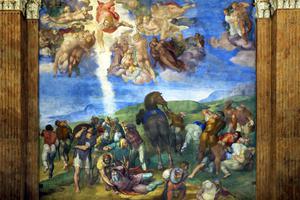
On Jan. 25, the Church celebrates the conversion of St. Paul.
Here are eight things you need to know about him — and his conversion.
1. Where was St. Paul from?
In Acts 21:39, St. Paul states:
I am a Jew, from Tarsus in Cilicia, a citizen of no mean city.
Tarsus was the capital city of the Roman province of Cilicia. This is on the southeast coast of modern Turkey, so St. Paul was not from the Holy Land. He was actually a Jew born in what is now Turkey.
It was a port city and a noted commercial center. For these reasons, and because it was the capital, he can describe it as “no mean city” (that is, no common, ordinary city). It was famous.
One of the things it was famous for was being the place where Mark Anthony first met Cleopatra, after which they embarked on their doomed alliance.
Tarsus survives today as the city of Mersin, Turkey.
2. Where was Paul raised and educated?
In Jerusalem. In Acts 22:3, Paul gives a bit more information about his background:
I am a Jew, born at Tarsus in Cilicia, but brought up in this city [Jerusalem] at the feet of Gamaliel, educated according to the strict manner of the law of our fathers, being zealous for God as you all are this day.
Gamaliel was a famous Jewish teacher. So famous, in fact, that we know about him today from Jewish sources.
Gamaliel is also mentioned in Acts, where he takes an open-minded view of Christianity, urging that it not be persecuted (Acts 5:34-42). Paul did not agree with him at this time, because this was before Paul's great persecution of the Church, as well as before his conversion.
3. If he was born in Tarsus and brought up in Jerusalem, what was Paul’s citizenship?
Over the course of his life, Paul probably had multiple citizenships, some of them simultaneously.
In the ancient world, a citizen was a person who had special legal privileges from belonging to a particular city. That's where the word “citizen” comes from.
Today we think of citizenship as indicating the nation-state to which a person belongs, but in the ancient world it originally referred to cities.
When he was born, St. Paul may have been a legal citizen of Tarsus, and later he may have been a legal citizen of Jerusalem. But there is another city that we know for a fact he was a citizen of: Rome.
This was not a common thing. Most of the people who were subjects of the Roman Empire were not citizens of the city of Rome. St. Paul was, even though he was a Jew born in Turkey.
This was because the Romans had a policy of allowing people — even foreigners — to become citizens of Rome to encourage engagement with and loyalty to Rome.
Citizenship could be gained by a number of means, including inheriting it from one of your ancestors. This was the case with St. Paul, which was very fortunate for him.
In Acts 22 we read:
So the tribune came and said to [Paul], ‘Tell me, are you a Roman citizen?’ And he said, ‘Yes.’ The tribune answered, ‘I bought this citizenship for a large sum.‘ Paul said, ‘But I was born a citizen.’
4. Why is Paul’s Roman citizenship important?
Roman citizens had special legal rights in the Roman Empire. You couldn’t treat them like ordinary people. In particular, you had to respect their special rights in legal proceedings.
This is reflected in what happens to Paul in Acts 22:
The tribune commanded [Paul] to be brought into the barracks, and ordered him to be examined by scourging, to find out why [the men of Jerusalem] shouted thus against him. But when they had tied him up with the thongs, Paul said to the centurion who was standing by, "Is it lawful for you to scourge a man who is a Roman citizen, and uncondemned?" When the centurion heard that, he went to the tribune and said to him, "What are you about to do? For this man is a Roman citizen."
When Paul confirms that he is a Roman citizen, the tribune's attitude changes:
So those who were about to examine him withdrew from him instantly; and the tribune also was afraid, for he realized that Paul was a Roman citizen and that he had bound him.
Although he had been long delayed in visiting the city (Romans 1:8-15), the special rights he had as a Roman citizen led to St. Paul finally coming to Rome.
5. Why did St. Paul’s citizenship lead to him finally coming to Rome?
One of the rights that Roman citizenship conferred was to have your case tried directly before Caesar, and so one of the turning points in the book of Acts is found in Chapter 25, where we read:
But Festus, wishing to do the Jews a favor, said to Paul, "Do you wish to go up to Jerusalem, and there be tried on these charges before me?" But Paul said, "I am standing before Caesar's tribunal, where I ought to be tried; to the Jews I have done no wrong, as you know very well. If then I am a wrongdoer, and have committed anything for which I deserve to die, I do not seek to escape death; but if there is nothing in their charges against me, no one can give me up to them. I appeal to Caesar." Then Festus, when he had conferred with his council, answered, "You have appealed to Caesar; to Caesar you shall go."
The Caesar at the time was Nero, and — although we have reason to think that Paul was released after his first trial before Nero — he eventually fell afoul of the cruel dictator, who ordered him beheaded. He was buried on the Appian Road (where the Basilica of St. Paul-outside-the-walls is now).
It is thought that St. Paul’s status as a Roman citizen is what spared him the fate that St. Peter suffered. St. Peter was crucified, but this was a fate so cruel that it could not be imposed on Roman citizens (taking hours to accomplish), and so St. Paul was beheaded, swiftly and comparatively less painfully.
6. Is St. Paul’s name “change” significant?
Not as much as you'd think. We're used to people in the Bible having dramatic, really significant name changes, like when Abram becomes Abraham, Jacob becomes Israel, or Simon becomes Peter.
St. Paul's name was basically a practical affair. In Aramaic, his name was Sha’ul, but he needed to work with Greeks. Greek doesn't have the sh- sound, so Greeks wouldn't have been able to pronounce his birth name.
That's why in the Greek New Testament, he's referred to as both Saul (Saulos) and Paul (Paulos). They're forms of his Jewish name that get rid of the troublesome initial sound and replace it with something more friendly to the Greek tongue (as well as adding a Greek ending -os).
It's like when someone from China who works in America picks a name that’s easier for English-speakers to pronounce.
Thus his alternate name — not really a name "change" — is introduced without much fanfare in the middle of a verse:
But Saul, who is also called Paul, filled with the Holy Spirit, looked intently at him [Acts 13:9].
7. Do the accounts of St. Paul’s conversion contradict each other?
Not really. The conversion of St. Paul is recounted three times in Acts — Chapters 2, 22 and 26. Sometimes people accuse these of contradicting each other based on what they say about what Paul's companions perceived during the event, according to the first two accounts:
- “The men who were traveling with him stood speechless, hearing the voice but seeing no one.” (Acts 9:7)
- “Now those who were with me saw the light but did not hear the voice of the one who was speaking to me.” (Acts 22:9)
The seeming contradiction here is an artifact of the English translation. It's not there in the Greek. Without going into the grammatical details, Greek makes a distinction between different ways of hearing — mere perception of the sound vs. understanding it.
That's what's happening here: The men with Paul heard the voice but didn't understand what was being said.
8. What key teaching of St. Paul goes back to his first encounter with Christ?
One of St. Paul's major themes in his letters is the idea of the Church as the mystical Body of Christ.
This theme is a uniquely Pauline theme. It also seems echoed in Christ's very first words to Paul: "Saul, Saul, why do you persecute me?" (Acts 9:4)
Thus far, Paul has been persecuting individual Christians — members of Christ's Church — but Jesus identifies with them in such a way that he says Paul is persecuting him.
Paul's later reflection on the first words Jesus spoke to him may have led him to understand the Church as Christ's mystical body.
- Keywords:
- conversion of st. paul
- conversion
- st. paul