Print Article | Email Article | Write To Us

Every Part of the Buffalo

Share
Friday, March 18, 2011 8:00 AM Comments (17)

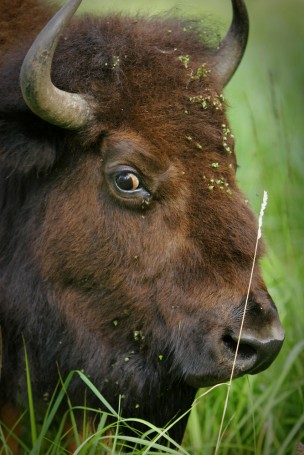
Remember learning in third grade that the Native Americans used every part of the buffalo? The hide, the hooves, the horns, the organs, the bones, the sinew, and of course the meat—it was all put to good use, and helped them survive.  Nothing went to waste, not even the waste! They burned that for fuel.

Well, being a Catholic is kind of like that. Who could possibly find a use for a leaky pipe, a suicidal van, a five-year-old boy who routinely goes berserk, a bulging waistline, a wrenched back and another sleepless night, or fleas?

Who but God?

I certainly don’t want all of those things; I have no use for them at all. But when they come rumbling across the landscape at me in herds, I can just point them in God’s direction. He can handle them, and He has no end of good ideas.

And it’s not only the buffalo chips of daily life that are useful. I can offer up the good things, too: the baby’s silky hair, a juicy clementine, a loving and faithful husband, a silly joke, the hidden, graceful lines of chicken bones, an unexpectedly easy washing machine repair—God knows what to do with those, too.

I don’t trot around feeling grateful or accepting all the time—far from it. But at least at my best moments, I know there’s some use for every part of the buffalo that is me.

image

Filed under prayer, suffering

Comments

Post a Comment

Ooooh, nice!  I’ll have to remember this on days when I feel like a big, fat buffalo chip myself!

Yup - buffalo chip here too :-) Great for this Friday in Lent!!

Thanks. I needed that!

Awesome reflection, Simcha. God is the ultimate in efficiency. He reuses and repurposes everything from the tiniest particle to the largest piece of debris. After all, He took the rubbish heap of the sins of humanity and used it to construct the greatest sign of love the world has ever known - the crucifix.

That is a lovely picture of a buffalo!

Isn’t it, though?  I tried to find one smiling with its teeth showing, but I was pressed for time.

Nice blog. Just a side note, however, and not to quibble or anything, but they could be wasteful as well. The indians did find a use for everything, yes. But Lewis & Clark’s journal mentions how the plains natives would stampede a herd over a cliff, use the ones they could use and leave a hoard of others to rot in the river below.

Ha - I’ve heard that, too—that’s why I said “remember what we learned in 3rd grade!”  (Thanks for not quibbling, though.  I’m sitting here listening to my 11-year-old daughter discuss whether or not her 12-year-old sister offended her or not.  So, yeah, full up on quibbling for today.)

Simcha, I couldn’t imagine any other blogger on the planet describing themselves as a buffalo. You made my day.

If we weren’t all out of ink, I’d print that buffalo and put it in a prominent place to remind me about what you just said.

Your take on buffaloes is the same as my Grandma’s take on dandelions:
http://www.zealforyourhouseconsumesme.com/2011/03/whats-dandelion-worth.html

So glad I clicked to read this post!  What mom out there can’t relate to the buffalo chips of daily life?!

The indians did no such thing. They were mass killers of Buffalo and they used to stampede them off cliffs and leave hundreds of them dead and dying in huge stinking piles of flesh and when indian tribes were not doing that they were wiping-out the white deer population and when they were not doing that they were setting fires that destroyed millions of acres of forests and when they were not doing that they were inventing biological warfare by heaving diseased animals pelts into rivers above the camps of Europeans in Canada and Maine.

@Vermont: Thank you for the reminder that no group of human beings is ever perfect and anytime you hear otherwise,  you can bet your life it’s not the truth.

@Vermont Crank—bless your heart; I think you missed the point just a wee bit.

The point for me is the evil of mythical indoctrination that instructs innocent minds that the savages of Turtle Island were worthy of emulation and lived in harmony with nature.  An argument based upon that false myth is destructive in the long run because, eventually, those young innocent minds will mature and, hopefully, become curious and when that curious mind learns the truth that curious mind will likely think - “I wonder what else they lied to me about?”

Said otherwise, false myths ultimately undermine authority.

All minds, especially young minds, need to be nourished on the truth.

Good historicity is a good thing; calling people “savages” is a bad thing.

Post a Comment

By submitting this form, you give The National Catholic Register permission to publish this comment. Comments will be published at our discretion, and may be edited for clarity and length. For best formatting, please limit your response to one paragraph and don't hit "enter" to force line breaks.

Name:

Email:

Write your comment:

Please enter the word you see in the image below:


Notify me of follow-up comments.

About Simcha Fisher

Simcha Fisher
  • Get the RSS feed
Simcha Fisher writes for several publications and blogs at I Have to Sit Down. She lives in New Hampshire with her husband and nine children. Without supernatural aid, she would hardly be a human being.

E-mail Signup

Receive our free e-mail updates!

As part of this free service, you will receive occasional special offers