Potent Antidote to Relativism
Editorial
While Catholic converts in the pro-life movement say that the Church’s consistent witness inspired them to learn more about the faith, there are cradle Catholics — including national and state political leaders — who openly challenge teachings on abortion and traditional marriage.
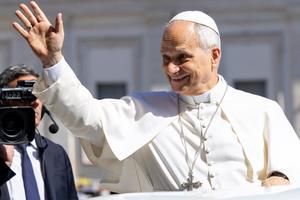
In Porta Fidei, his apostolic letter proclaiming the Year of Faith, to begin in October, Pope Benedict XVI acknowledged that secularism has weakened the moral foundations of Western culture and politics.
“Whereas in the past it was possible to recognize a unitary cultural matrix, broadly accepted in its appeal to the content of the faith and the values inspired by it, today this no longer seems to be the case in large swathes of society, because of a profound crisis of faith that has affected many people,” he says.
The Holy Father offers an antidote — a muscular catechesis that adheres to Catholic faith and morals — as the centerpiece of the New Evangelization.
In January, the Congregation for the Doctrine of the Faith issued a related statement, which noted that the Pope’s initiative “is intended to contribute to a renewed conversion to the Lord Jesus and to the rediscovery of faith, so that the members of the Church will be credible and joy-filled witnesses to the risen Lord, capable of leading those many people who are seeking it to the door of faith.”
The Congregation for the Doctrine of the Faith provided general guidelines for national bishops’ conferences that stressed the importance of improving “the quality of catechesis,” anchored in the Catechism.
The document advised that local ordinaries use media to help reach the larger community. The Vatican will establish a dedicated website to highlight promising new programs.
In the coming months we will provide extensive coverage of these initiatives (indeed, we have already done so) and invite Catholic leaders to share their plans with our readers.
As Pope Benedict noted in Porta Fidei, “We cannot accept that salt should become tasteless or the light be kept hidden (Matthew 5:13-16). … We must rediscover a taste for feeding ourselves on the word of God, faithfully handed down by the Church, and on the bread of life, offered as sustenance for his disciples” (John 6:51).