Notre Dame Beacon for Life Keeps Light On
Young law professor O. Carter Snead will take the helm of the Center for Ethics and Culture.
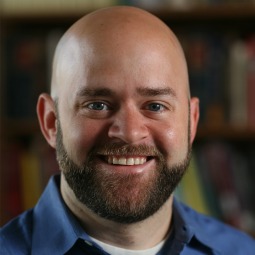
Thanksgiving came early on the campus of the University of Notre Dame this fall for supporters of the Center for Ethics and Culture there, as the school announced that O. Carter Snead would be succeeding David Solomon as the center’s director.
When Solomon was told last year that his term would be ending at the conclusion of this academic year, supporters of the center and the Fund to Protect Human Life, which relies on the center for administrative support, were alarmed. The move has been understood as retribution for his outspoken criticism of the administration’s awarding of an honorary degree to President Barack Obama, an ardent supporter of legal abortion, in principle and administrative policy. So the Oct. 25 announcement that Snead would head the center, effective July 1, is being greeted on and off campus with relief, gratitude and even enthusiasm.
Campus reaction from those active in the center is uniformly positive. “It is an answer to prayer,” said Holy Cross Father Wilson Miscamble, a professor of history at Notre Dame. “I am delighted at this appointment. Carter is terrific and deeply pro-life. He will assure a good continuity with the excellent work that David Solomon has begun.”
“I’m so excited,” Solomon said: Snead is “passionately pro-life, a real Catholic, deeply interested in Catholic higher education, and knows what that means. He’s a leading voice on campus on bioethical issues.”
Along with Helen Alvaré of George Mason University and fellow ND law professor Gerard Bradley, Snead, 38, has been a leading critic of the Obama administration’s mandated coverage of contraception as part of the health-care legislation that passed in March 2010. He is former general counsel for the President’s Council on Bioethics and has been on the law faculty at Notre Dame since 2005.
Snead has also been an enthusiastic part of both the center and the Fund to Protect Human Life and a faculty member at this summer’s inaugural Vitae Institute, a fund program that focuses on federal policy on stem-cell research.
“Carter is a perfect choice to succeed David Solomon as director of the Center for Ethics and Culture,” said Daniel Philpott, a professor of political science. “Both his intellectual and his leadership abilities are outstanding. He knows life issues inside out. He is extremely well-connected with the pro-life movement and among pro-life politicians and civil servants. And he himself has a marvelous track record of high-level appointments, not least his work [as] general counsel for the President’s Council on Bioethics.”
Solomon, noting that Snead is “a lawyer, not a philosopher,” expects that “Carter will take the center in new and exciting directions, still anchored in the documents of JPII. He recognizes that life issues are at the heart of who we are.”
ND’s Catholic Identity
As for Snead, he is equally enthusiastic about the vision and work of his predecessor. “In his service as the founding director of the Center for Ethics and Culture, David Solomon created and sustained an essential, indispensable institution dedicated to the pursuit of matters that lie at the heart of Notre Dame’s distinctive educational and religious mission,” Snead said. “From its inception, the center has aspired to be the leading locus of scholarly reflection within the Catholic intellectual and moral tradition.”
Solomon’s “animating vision for the center” has created “a vibrant forum for dialogue and exchange for elite and emerging scholars from a diversity of viewpoints and disciplines,” Snead said.
“It has been a space for students, scholars and public figures inside and outside of Notre Dame to explore together the richness of the Catholic tradition, including especially its unique resources for engaging concrete ethical problems in the broader culture,” he continued. These conversations are always “guided by a commitment to rational discourse seeking truth.”
Many familiar with the situation believe that public pressure about the school’s identity — including some critical comments Father Miscamble made in an interview with the Register this summer — may have influenced the decision to appoint Snead.
Solomon, meanwhile, still plans to be as active at the center as Snead wants him to be and will serve as chairman of the independent committee that runs the fund, in addition to continuing his responsibilities as a professor of philosophy at the university.
Of course, one leadership post does not a university make. William Dempsey, who runs the Sycamore Trust, an alumni group concerned with secularization at ND, does worry that the administration may think this is more than it is. While the Center for Ethics and Culture’s Catholic identity remains solid, the school still has miles to go, despite beacons like the center, the fund and other programs around campus like the Alliance for Catholic Education.
“Having an active pro-life program,” said Dempsey, “does not affect who teaches and what they teach and, therefore, does not make a school Catholic. The absence of such a program may very well signal a school that has lost its Catholic identity; but its presence, while much to be desired, does not make a school Catholic.”
But he, too, applauds the Snead appointment. “This is a very welcome development, as we say. An increasingly strong pro-life presence on campus is bound to have salutary effects.”
Underscoring just how welcome it is, William McGurn, former speechwriter for President George W. Bush, who, along with his wife, Julie, sits on the center’s advisory committee, said, “Carter belongs to that most priceless breed of Catholic teachers: a man whose life and labors are one with his faith. His appointment gives the center a worthy successor to Dave Solomon — and gives hope to all those who look to Our Lady’s university for leadership in building a culture of life.”
Solomon’s tenure at the helm of the center, meanwhile, doesn’t end until after the second Vitae Institute next summer, a pro-life training program which, last year, hosted doctors, policymakers and over a score of pro-life activists. Two weeks before Thanksgiving, the center will hold its main annual event, its 12th fall conference, called “Radical Emancipation: Confronting the Challenge of Secularization.”
“This conference is going to be a big deal,” Solomon said. More than 600 people are registered to attend. “We’ve had to close down registration for meals; we’ve booked all the dining-room space we can on campus,” he reported.
Father Robert Barron, the author and host of the acclaimed book and TV series Catholicism, airing on PBS and EWTN this fall, will give the keynote address.
“The conference is on secularization,” Solomon said. “We agree with John Paul II and Pope Benedict XVI that secularization is at the heart of our problems. When you lose the concept of God, you lose the concept of man. ... You are freed in a radical way that is tragic for human life. Secularization is at the heart of a lot of the cultural issues we face.”
It will be a real intellectual “festival,” he said.
And with the news of the Snead appointment, those gathered will be able to celebrate a newfound confidence that at least the secularization will not be spreading to the Center for Ethics and Human Life.
Kathryn Jean Lopez is editor-at-large of National Review Online and a nationally syndicated columnist.