Nigerian Catholics Respond to Attack With Prayer and Fasting
Pastor requests reparation by his parishioners for the desecration of their church’s desecration and prayers for the perpetrators’ conversion.
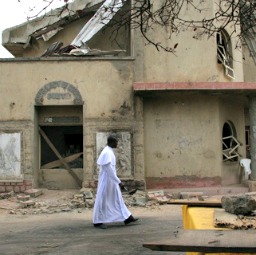
LAGOS, Nigeria — After his parish in southern Nigeria was desecrated Nov. 4, Msgr. Obiora Ike called on his parishioners to observe a week of prayer and penance.
“Msgr. Ike has called for seven days of prayer, fasting, penance and reparation for the Christian faithful and for the conversion of these perpetrators,” according to a statement on his website.
Around 2am on Nov. 4, attackers entered St. Leo the Great parish in Enugu, vandalizing the building and destroying infrastructure and sacred items.
Everything in the church was destroyed: the altar, sacred vessels, musical equipment, seats, pulpit, statues, religious images and the entire microphone system.
The destruction included “the Blessed Sacrament that was desecrated,” according to Msgr. Ike's statement.
By 4am, security agents arrived at the parish and assessed the damage. According to Msgr. Ike, the damage totals around $63,500.
Sunday Mass at the parish was held outside “under the heavy sunshine.” Msgr. Ike's sermon that day encouraged the congregation to “remain steadfast in their faith, despite all the persecution, religious intolerance and fanaticism.” He also urged them to remain dedicated in prayer and forgive the perpetrators.
A cached version of the parish website features prayers for peace, for Nigeria in distress and against bribery and corruption in Nigeria.
Father Paulinus Ogara, a priest of the Diocese of Enugu, told The Sun of Lagos that the attackers tagged the wall of the church with graffiti “warning against the worship of idols.”
The reference to idolatry led to speculation on the Nigerian forum “Nairaland” that the attack was perpetrated either by Protestant or Pentecostal Christians or, according to one suggestion, “It's the Boko Haram in disguise? Maybe they want to set the Christians against themselves by making it look like it was done by other Christian faithfuls.”
According to an Associated Press count, the Islamist group Boko Haram has been responsible for more than 690 killings this year alone.
The attack on St. Leo's follows an assault two weeks ago on Seat of Wisdom, another parish in Enugu, according to The Sun.
Bishop Callistus Onaga of Enugu has called on Christians “to be alert and defend their faith and continue the struggle against all odds,” Msgr. Ike said.
Enugu is located in the Christian-dominated south of Nigeria. Violence against Christians in the country is usually committed in the north, where the population is primarily Muslim. In 2006, the population of the Enugu Diocese was 60% Catholic.