Print Article | Email Article | Write To Us

Daily News

Catholic Heroes for Today: Part 5 (1883)

U.S. sainthood causes flourish in 2011
08/11/2011 Comments (3)
Courtesy of Opus Dei

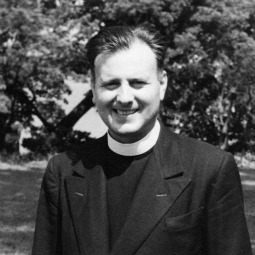
Father Joseph Muzquiz in the 1950s.

– Courtesy of Opus Dei

It’s “American Saints Week” at the Register.

We’ve been looking at updates in the cases of several American men and women whose causes for beatification have been ongoing. Yesterday, we spoke about a new cause, that of Father Aloysius Ellacuria. Today, we look at another cause that was just introduced this year.


Father Joseph Muzquiz


Although devoted to his Basque heritage, Father Ellacuria became an American citizen, as did Father Joseph Muzquiz, who worked and died in the Boston Archdiocese.

Father Muzquiz was one of the first three priests ordained for Opus Dei and the first Opus Dei priest to come to the United States. He arrived in 1949 to establish Opus Dei at the request of St. Josemaría Escrivá, the founder, who supervised Father Muzquiz’s studies in Spain.

In just a decade, the young priest established Opus Dei centers in a number of major cities, including Boston, Washington and St. Louis. Next, he helped bring Opus Dei to Canada and Japan; then he returned to the United States. He died in 1983.

As the vice postulator of Father Muzquiz’s cause, Opus Dei Father David Cavanagh said that Father Muzquiz received the charism from God to begin Opus Dei here, and “he lived it himself — ordinary things, day in and day out. As it said on his prayer card, he has helped people to discover the way of sanctity in ordinary things, how to find joy and peace and Our Lord in daily life. In this country and many places around the world, many people discovered this was possible.”

Father Cavanagh emphasizes the powerful Christian witness Father Muzquiz gave, setting an example by living the teachings of Opus Daily in his priestly duties.

“Certainly, at this time with the scandals,” Father Cavanagh said, “having an example of a priest doing the ordinary priestly duties each day, fulfilling them with great love and trying to do them very well becomes an example to everybody in that regard.” His example “resonates with so many people — that they are called to be saints.”

Tomorrow: American saints’ message: Strive for holiness wherever you are. Register staff writer Joseph Pronechen writes from Trumbull, Connecticut.


Filed under father joseph muzquiz, josemaria escriva, opus dei, saints causes

Comments

Post a Comment

I am looking forward to reading about this priest.

Have you ever thought you could get there too? The main thing I learn from all this holy people is humility, prayer, and silence. We have one thing in common to this man: we all are sinners but we believe that with God’s grace we can get there. God Bless you all. I am only 23 and I want to there and I know I can start from now on. To be holy in my little daily tasks is a good start.

The legacy of OD in America is not all rosy.
-Pressure cooker, coercive environment in OD houses (especially in the ’70-80’s) resulting in broken families and suicide of members
-Exploitation of Numerary assistants to do the “little thing”, that are, really, just “too little” for the so “holy” Numeraries (e.g. washing their underwear for nothing).
-Recruitment of children without parental knowledge to be part of the OD “new family” then expulsion of same members when no longer useful.
-The Robert Hanssen scandal, with the resulting execution of courageous agents working to stop soviet totalitarianism. The resulting distraction to US national security.
-OD methodology copied by people like Maciel, to hide his crimes and ruin countless lives.
Those are some fruits of OD in America.
But these darker aspects will not be examined, because the Vatican Office of Promoter of Faith, that looked at arguments against a cause of sainthood for 500 years, was abolished in 1981, when OD operatives were in charge of Canon law under JP2 (Herranz…). This was to allow the fast track beatification of Escriva. This resulted in a cheapened, commercialized and polarized sainthood process.
Perhaps it is time for OD to realize that in their film, “There be Dragons”, the character of Manolo represents the hidden side of OD.
Until OD does not ask for forgiveness for the harm they have done to others, until they don’t re-examine aspects of Escriva’s writing that are not in synch with Church tradition and teaching, they will not be a mature members of the Church, but rather serve themselves with their re-defined vices as virtues (coercions, intransigence and shamelessness).
When OD starts to advocate for the return of an independent, fully functional Office of the Promoter of Faith, this will be a sign that they are on the right track. Peace.

Post a Comment

By submitting this form, you give The National Catholic Register permission to publish this comment. Comments will be published at our discretion, and may be edited for clarity and length. For best formatting, please limit your response to one paragraph and don't hit "enter" to force line breaks.

Name:

Email:

Write your comment:

Please enter the word you see in the image below:


Notify me of follow-up comments.