Print Article | Email Article | Write To Us

Daily News

St. Philip's Tomb Found? (4779)

An archaeological team believes they have discovered the final resting place of the apostle in southwest Turkey.
07/28/2011 Comments (15)
Wikipedia

– Wikipedia

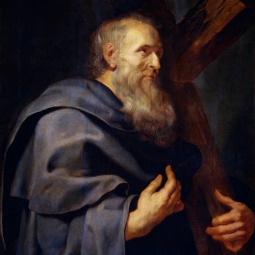
DENIZLI, Turkey (EWTN News) — An archaeological team working in southwest Turkey says it has uncovered the tomb of St. Philip the Apostle.

Italian professor Francesco D’Andria, head of the excavation team at the ancient city of Hierapolis in the province of Denizli, told reporters on July 26 that experts had reached the apostle’s tomb.

Archaeologists had been working for years to find the tomb, he said. They reached the monument while working on the ruins of a newly unearthed church in Hierapolis, the Turkish news agency Anadolu reports. The city of Hierapolis, whose name means “sacred city,” is a UNESCO World Heritage Site. It is famous for its historical hot springs and was used as a spa since the second century. It features a mixture of pagan, Roman, Jewish and early Christian influences.

The structure of the tomb and the writings on it prove that it belonged to St. Philip the Apostle, D’Andria said. He characterized the discovery as a major development both for archaeology and the Christian world.

St. Philip was one of the first followers of Jesus, telling others, “Come and see.” During the Last Supper, he asked Jesus to show them God the Father and heard Jesus’ reply: “He who has seen me has seen the Father.”

After the Resurrection, St. Philip preached in Greece, Syria and the Phrygia region now in west-central Anatolia. He is believed to have died a martyr in the city around the year 80 by being crucified upside down or beheaded.

In his 2006 expositions on the lives of the apostles, Pope Benedict XVI lauded the saint’s “characteristics of true witness.”

St. Philip’s alleged tomb, which has not yet been opened, is expected to become an important Christian pilgrimage destination.

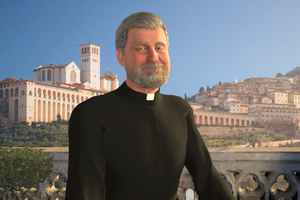


Filed under apostles, archeology, st. philip the apostle, turkey

Comments

Post a Comment

So, how many apostles are still missing?  I wonder.

It wasn’t Philip that was crucified upside down, that was Peter. Uhhhh, they make me feel stupid when I reiterated this article. Still this news is very cool.

Christopher, Saint Peter was fed to lions, Saint Paul was crucified upside down

That is news worth celebrating by all the catholics worldwide.waiting to hear from our papa(pope).

It was Peter who was crucified upside down.  I believe Saint Paul was beheaded.

George…St Peter was crucified upside down and St Paul was beheaded

George, it is St. Peter who was crucified upside down. Ive been to the church in Italy with the painting of St Peter crucified upside down

I think St Peter was crucified upside down because he wasn’t worthy of being crucified like his Master. St Paul was beheaded.

St Peter was crucified upside-down because he did not feel worthy to be crucified in the same manner as Christ

He was stoned to death but he was the first martyr… Great news!!

St Steven was the first martr

@David: All I know is Peter & Paul (Rome), James (Spain) & Thomas (India)..not sure about other Apostles…
@George: It was Peter who was crucified upside down, that’s why one of the Papal symbol is the upside down cross
@Gina: the one stoned to death to be first martyr is St Stephen, but all the Apostles (except John)were martyrs
anyway great news, waiting for clarification from Papa Benedict

This is Divine… the love of God in the Highest Power.

No, Gina, the first martyr (who was stoned to death, that is true) was St. Stephen, a deacon in Jerusalem.  St. Philip the apostle died a martyr’s death much later.  According to the ‘Acts of Philip’ he was crucified upside down (like St. Peter), and according to another account, he was beheaded.  Take your pick.  Several ancient texts refer to the apostle Philip being buried in Hierapolis, so it’s no suprise that his tomb would be found there, though there was apparently also a deacon named Philip who lived in the same town (and thus there may have been some conflation of the two).  The tomb (or a tomb) was discovered a long time ago, and the remains inside were taken to Constantinople.  So, if this is the tomb of the Apostle Philip, it may be empty.

Gina, it was St. Stephen who was the first martyr. He was stoned, probably at the behest of Saul of Tarsus before his conversion.

Post a Comment

By submitting this form, you give The National Catholic Register permission to publish this comment. Comments will be published at our discretion, and may be edited for clarity and length. For best formatting, please limit your response to one paragraph and don't hit "enter" to force line breaks.

Name:

Email:

Write your comment:

Please enter the word you see in the image below:


Notify me of follow-up comments.