Relic Status in the Middle East?
This melting pot of peoples is becoming a cauldron. Experts talk to the Register, using words like “Christianophobia” and “religious cleansing,” about why everyone is nervous about the future. Part 2 of 2.
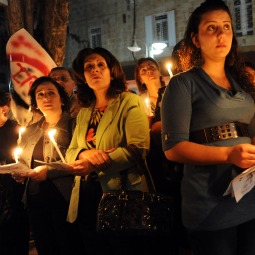
BEIRUT — What can prevent Christianity from becoming a relic in the very place it was born?
In 1948 Jerusalem was about one-fifth Christian; today, less than 2% of residents are Christian.
In Iraq, it is estimated that about half of the country’s 1.4 million Christians have fled the country since the American invasion in 2003, and the exodus of Christians continues on a daily basis.
There appear to be increasing attacks on Christian communities in the Middle East, as well as pressure on such communities in India and Pakistan, and much of the trouble seems to be coming from radical Islamists. The Register is examining the problem, with this two-part series (Part 1 appeared last week) and other coverage.
The Christian presence is vital to the stability of the region.
“Nurturing settled, stable, prosperous and reasonably free and secure native Christian communities in the Middle East has served in many instances as a factor promoting Islamic openness and moderation,” said Habib Malik, author of “Islamism and the Future of the Christians in the Middle East,” an essay published last spring by the Hoover Institution of Stanford University.
Jesuit Father Samir Khalil Samir, founder of the Center for Documentation and Research on Arab Christianity, points out, “As long as the Muslims live in a multicultural or multireligious area, they are more open; they have to examine their opinions with others. But when they are only among Muslims, as in Saudi Arabia, they tend to become more fanatic. They see all others as atheists or irreligious people, even if they are Christians or from other religions.”
At the close of the Synod of Bishops to address the plight of Christians in the Middle East in October, the bishops in a statement said, “We say to our Muslim fellow citizens: We are brothers and sisters; God wishes us to be together, united by one faith in God and by the dual commandment of love of God and neighbor.”
But Christians must be given their full rights as citizens, and the future peace and prosperity of the region requires civil societies built “on the basis of citizenship, religious freedom and freedom of conscience,” the bishops said.
“What Muslims living in the West demand for themselves — and receive — by way of rights and legal protections they ought to be ready to grant to Christians living in Muslim-majority countries,” said Malik, who is the son of the late Charles Malik, one of the architects of the Universal Declaration of Human Rights.
Lebanon
Patriarch of Antioch for Syriac Catholics Ignatius Youssef III Younan traveled from Beirut to be with his mourning flock for the memorial Mass commemorating those who were killed in the Oct. 31 terror attack on Our Lady of Deliverance Syriac Catholic Cathedral in Baghdad, Iraq. Two young priests were among those slaughtered.
“We need deeds, and not just … promises, that our Christian faithful feel really safe in their churches, houses and places of work,” said the patriarch in his homily.
The prelate has called for the upholding of human rights for Christians, followed up with realistic, concrete steps.
Patriarch Younan served as bishop of the New Jersey-based Syriac-rite diocese in the United States and Canada from 1995 until his election as patriarch in 2009. In an interview, he said that “because Christians in Middle Eastern countries are unable to stop further violence and terrorism and to publicly defend their basic rights — especially their liberty of worship and conscience as stipulated by the Universal Declaration of Human Rights — they badly need the support of freedom lovers in the civilized world to pressure governments to educate all their citizens in the culture of love and tolerance; to impose an effective supervision on the religious discourse, either in mosques or in the schools, so-called madrassa (religious schools where the Quran is memorized), and to exercise justice without discrimination between Muslims and non-Muslims.”
While there is no outright persecution of Christians in Lebanon, and by mandate the country’s president must be a Maronite Catholic, the Christian presence is nevertheless continually decreasing, following 30 years of war and foreign occupation. Christians now make up around a third of the population.
“In Lebanon, it’s the fear of the future,” said Father Samir. “We’re in an area where there’s no stability, and there’s a fear of this Islamic movement. It’s a wave: You see the wave coming. The wave is not yet in your country, but you feel it could come.”
Italian Cardinal Angelo Bagnasco on Jan. 24 said, “The Middle East is certainly the region with the highest tension; there, Christianophobia, which is the most current version of religious intolerance, is not far from becoming now a form of ethnic or religious cleansing,” despite the fact that “for centuries that land has been a laboratory of coexistence between different faiths and ethnic groups.”
Call for a Fatwa
In response to the horrific attacks on Christians in the Baghdad church in October and in Egypt Jan. 1, Mohammad el-Sammak, a Sunni Muslim who is secretary general of the National Committee for Islamic-Christian Dialogue in Lebanon, said he called for a meeting in Lebanon of Muslim religious leaders to issue a fatwa (religious dictum) that would say “that attacking any Christian is like attacking a Muslim and that attacking a church is like attacking a mosque.”
“By issuing a fatwa, that would disengage Islam from these crimes, and by this fatwa we target terrorists as criminals, as anti-Islam, anti-Christianity and anti-Arabism,” said Sammak, who is adviser to the grand mufti in Lebanon.
The proposed meeting would include the imam of Al-Azhar (the Islamic authority for Sunni Islam, located in Cairo), the minister of religious affairs for Saudi Arabia and the muftis from Palestine, Jordan, Syria and Iraq (Sunni and Shiite) and Lebanon.
That initiative, however, is in limbo now. Sammak said the fatwa has been drafted and had been submitted to Lebanese Prime Minister Saad Hariri. But Hariri was ousted Jan. 12, replaced by a new prime minister, Najib Mikati, who is trying to form a new government.
Chaldean Catholic Auxiliary Bishop Shlemon Wardini of Baghdad has called on the international community to “work together to cooperate for peace and security in the Middle East and all over the world.”
Accepting the “relic status” of Middle Eastern Christianity “betrays at best a cold indifference and at worst complicity in the ongoing extinction,” said Malik.
Yet, he points out, there is a glimmer of hope for the Middle East’s Christians, with tangible evidence in many Christian communities across the region of spiritual renewal among the youth.
Register correspondent Doreen Abi Raad writes from Beirut, Lebanon.